
When a player reviews a hand, the first instinct is usually to ask for the exact answer. That is useful, but the best study often comes from combining exact-hand lookup with range lookup.
\n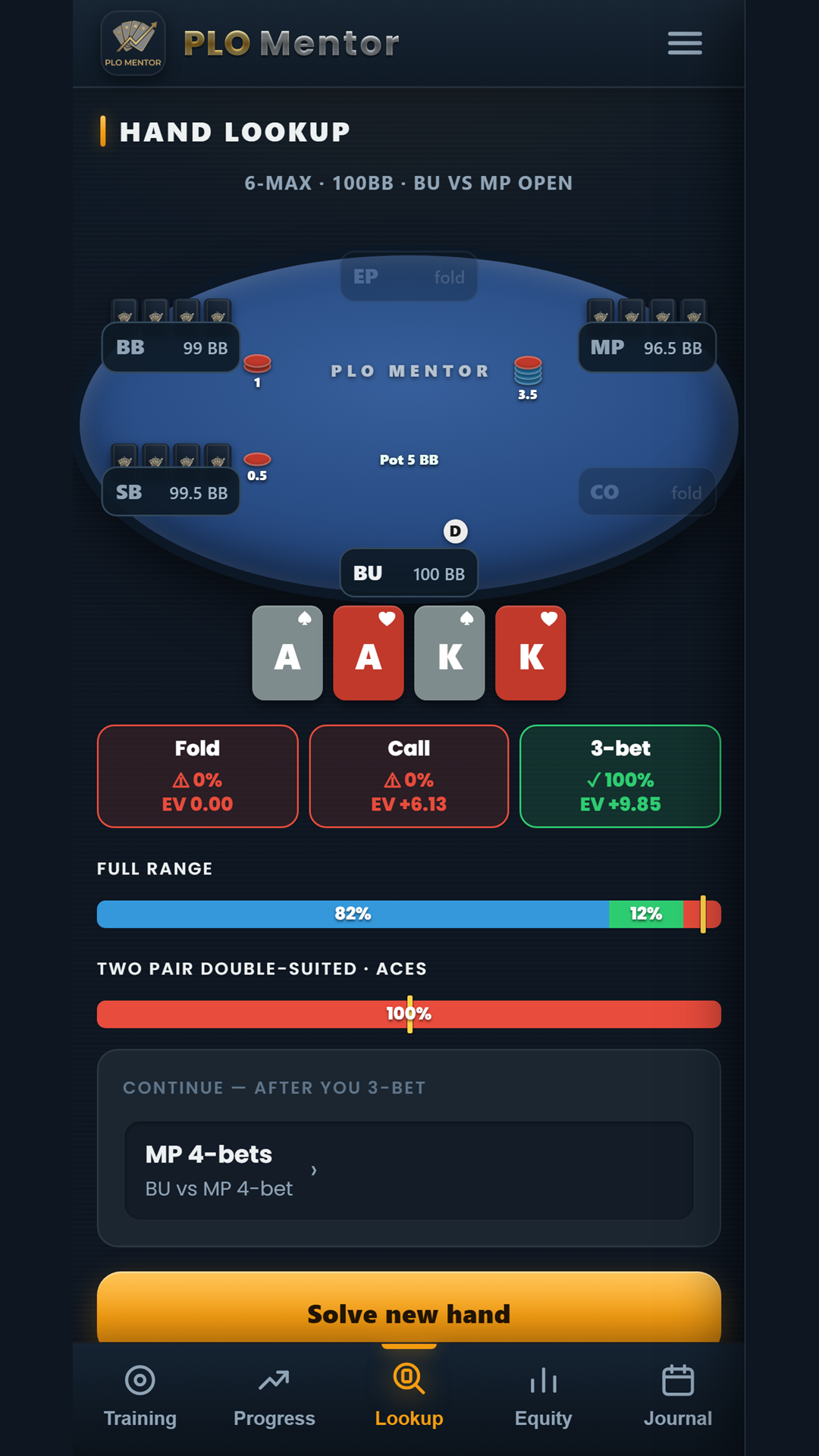
Exact hand lookup answers the immediate question
If you are unsure whether one specific hand should fold, call or raise, exact-hand lookup is the right starting point. It gives you a direct solver answer for the hand you actually played.
This is especially valuable after a session, when you want a clean answer to one decision without wading through a large chart first.
Range lookup explains the strategic neighbourhood
The exact hand answer matters, but it becomes much more useful when you inspect the surrounding range. Range lookup shows whether the hand is a clear action or part of a mixed boundary. It also highlights which structural features move nearby combinations from one action to another.
For example, perhaps one suit improvement converts a marginal call into a profitable raise, or perhaps a disconnected side card makes an apparently pretty hand much weaker in practice.
Use both modes together
A strong review process usually works in this order:
- Check the exact hand to answer the played decision.
- Inspect the wider range to understand where the hand sits.
- Compare neighbouring combinations to identify the structural driver.
- Reinforce the lesson later through drills.
Why this matters in PLO
Pot-Limit Omaha is too complex for isolated hand labels to carry enough meaning by themselves. Suitedness, connectivity, pairedness, nut potential and side-card interaction all matter. That is why exact review and range context work best together.
A practical rule
If your goal is What should I have done here?, begin with exact hand lookup. If your goal is How can I understand the broader pattern and make this decision better next time?, extend the review into range lookup.
Used together, the two approaches make PLO study faster, clearer and more transferable to real play.