
Many players know they should review hands after a session, but the process often becomes inconsistent. One day it turns into a deep solver dive, another day it becomes a quick emotional reaction to a big pot. A better approach is to use a simple, repeatable workflow.
1. Mark the hands worth reviewing
During or after the session, note the hands that felt unclear. These are often borderline opens, defends, 3-bets or squeeze spots—decisions where you were not confident even before seeing the result.
2. Start with Lookup
The fastest way to ground the review is to open the Lookup Tool and rebuild the relevant preflop situation. Check the exact hand first, then the surrounding range. This gives you a solver-based answer without guesswork.
\n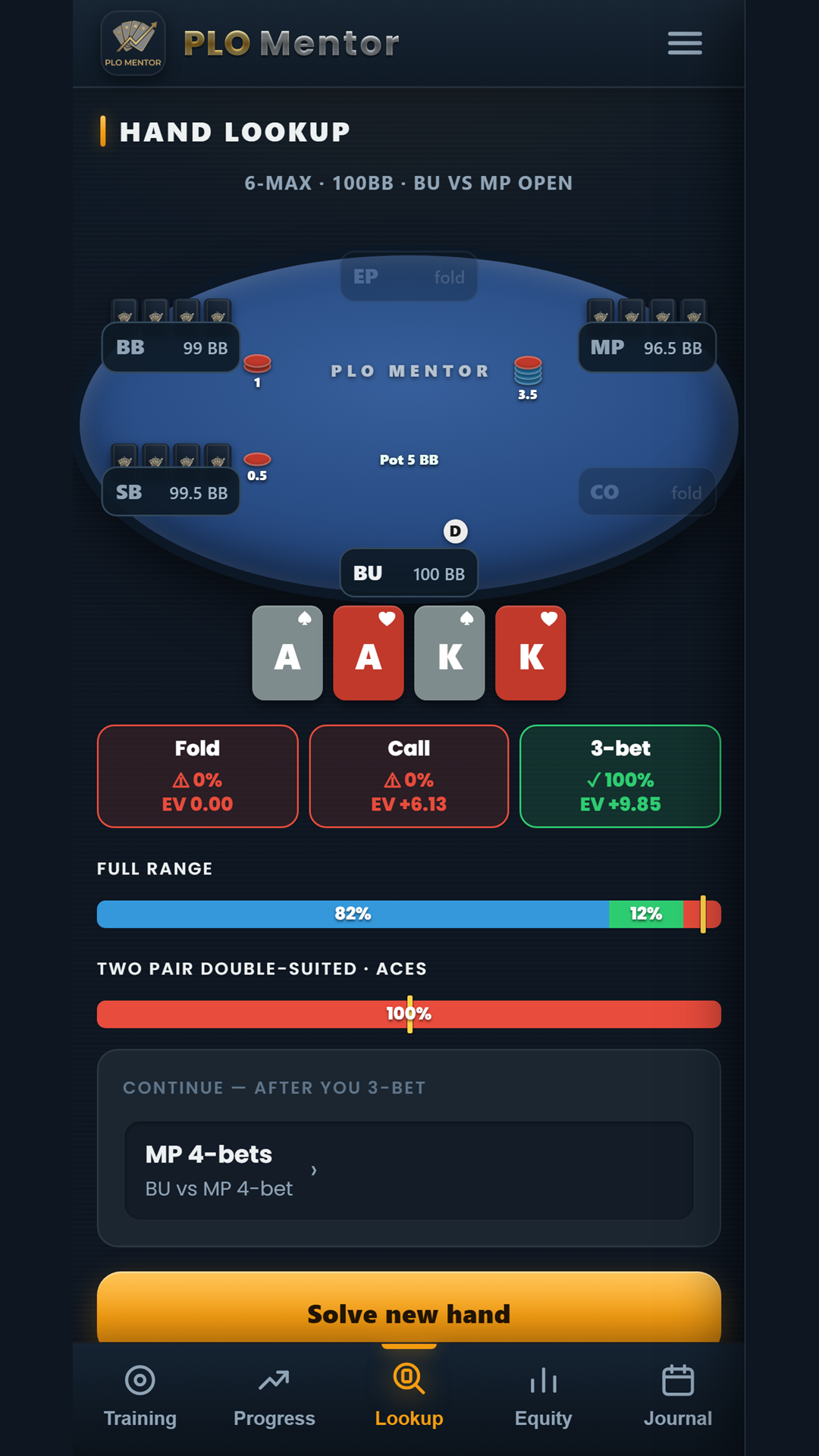
3. Use the Equity Calculator when the matchup matters
If your study question depends on how two exact hands or ranges interact, move to the Equity Calculator. Equity is not the whole strategy, but it is a valuable supporting lens—especially when you want to understand why one type of hand performs well against another.
4. Look for a pattern, not only a verdict
One reviewed hand is useful. Three similar reviewed hands may reveal a leak. Ask whether the problem repeats in one position, action sequence or structural category. If it does, the issue is no longer just a reviewed hand; it is a training target.
5. Reinforce the lesson with drills
Once you know the pattern, active training becomes the next step. A few minutes of focused repetition is often more valuable than passively rereading the same answer later.
6. Let Progress and Leak Finder guide your next session
If a pattern keeps showing up, it belongs in your next study block. PLO Mentor’s Progress view and Leak Finder help you connect reviewed hands with the parts of your game that deserve the most attention.
A five-minute review habit beats a perfect review plan
The goal is not to build a giant hand-history archive that you never revisit. It is to create a review process you can repeat after almost every session. Mark a few hands, verify the answer in Lookup, inspect the pattern, and then train it.
That routine is small enough to keep and powerful enough to move your decisions forward.